
Some emotional patterns can feel almost offensive in how often they return. You think you’ve healed, grown, evolved, and done the work. Then one little trigger shows up and suddenly, boom, there you are again.
Reacting.
Overexplaining.
People pleasing.
Ruminating.
I know that cycle well. Shadow work has been one of the most powerful tools for helping me understand what is really happening beneath the surface. It has helped me see unconscious emotions and repeated patterns not as failures, but as invitations to get honest about the parts of me that learned to hide, protect, suppress, or perform in order to survive.
When I meet those parts with curiosity instead of judgment, something begins to soften. I can see the wound beneath the reaction, the need beneath the pattern, and the younger version of me that was simply trying to stay safe. That is the heart of shadow work.
In this article, we’re walking through 12 shadow work prompts for emotional healing. These prompts can help you understand your patterns, reconnect with your real needs, build healthier boundaries, and create more supportive ways of coping.
Looking for more journal prompts? You may also enjoy my other article on 30 Days to Reclaim Your Power: Journal Prompts.
Affiliate disclosure: This post contains affiliate links. If you purchase through them, I may earn a small commission at no extra cost to you.
What shadow work is

Shadow work is the practice of exploring the parts of yourself that have been pushed out of awareness.
At its core, shadow work is a psychological and spiritual practice aimed at uncovering and integrating the hidden, repressed, or disowned parts of yourself. The concept was developed by Carl Jung, the Swiss psychiatrist who described the “shadow” as the aspects of our personality that the conscious mind rejects, suppresses, or deems unacceptable. These hidden parts can include fears, wounds, desires, emotions, beliefs, and even strengths that have been pushed out of awareness. By bringing them into conscious awareness, we have the opportunity to heal self sabotaging patterns, develop greater self understanding, and move toward a more integrated and authentic version of ourselves.
A lot of people hear the term shadow work and assume it has to be something heavy, intense, or dramatic. Sometimes it can be. But in my own experience, shadow work is often much quieter than that.
It can look like noticing the tightness in your throat when someone disappoints you. It can look like admitting that beneath your anger there is deep hurt. It can look like realizing that what you call being easygoing is actually abandoning your own emotions to keep others comfortable.
Those realizations are not always comfortable, but they can be incredibly freeing. When you begin to name what is actually happening within you, it becomes easier to stop moving through life from emotions, beliefs, and patterns you have never fully faced. Instead of unconsciously repeating them, you can start working with them consciously.
From personal experience, I know shadow work can stir up a lot, which is why supportive tools can make the process feel more grounded. Journal prompts can help you slow down, reflect, and gently name what is coming to the surface. Innertune can also be a beautiful companion for reinforcing healthier beliefs, self compassion, and emotional resilience as you move through the deeper layers of healing.
Sometimes healing is not only about uncovering old patterns. It is also about creating new ones that support the person you are becoming.
Before you begin
A quick grounded note before you begin your practice. Shadow work can bring up real and sometimes heavy emotions, so before you start journaling, I recommend creating a little safety around the experience. You might choose to sit somewhere quiet and comfortable, take a few slow breaths, place a hand on your chest or stomach to stay connected to your body, or keep a glass of water nearby. Give yourself permission to pause if you feel overwhelmed and return later if something feels too activating.
From personal experience, I’ve found that shadow work feels much safer and more supportive when I prepare my body before asking my mind to go deep. There have been times when I wanted immediate answers, but what I really needed was to slow down, breathe, and remind myself that healing does not have to be rushed. Shadow work is not about forcing yourself into pain. It is about meeting yourself with honesty, patience, self compassion, and care.
If you enjoy listening to meditation music while journaling, this soothing track may help you relax, slow down, and create a more supportive space for self reflection.
12 shadow work prompts for emotional healing
Below, I’ve grouped these prompts into four themes so the process feels intentional organized & makes it easier to move through.
Acknowledge hidden emotions
These first prompts help uncover what you may be avoiding, suppressing, or disguising.
1. What emotions do I tend to avoid feeling until they come out in unhealthy ways?
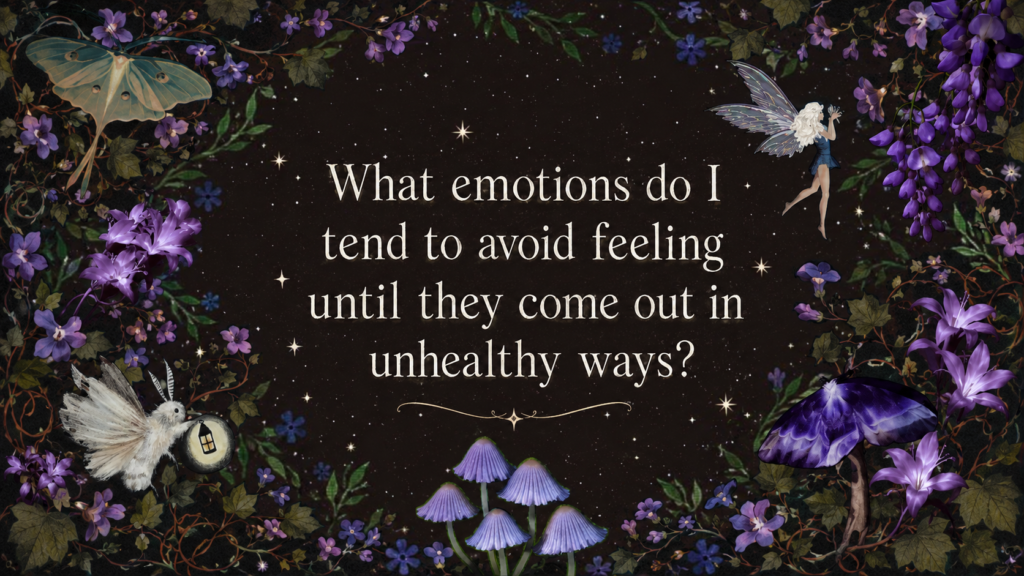
Many of us tend to avoid emotions because, at some point, feeling them did not feel SAFE. Anger may have been punished. Sadness may have been ignored. Neediness may have been mocked. So now the body delays the feeling until it leaks out in unhealthy ways.
Maybe your sadness comes out as numbness.
Maybe your fear comes out as control.
Maybe your disappointment comes out as irritability.
Write down the emotions you tend to skip over. Then reflect on how they tend to show up in your thoughts, behaviors, or reactions.
2. When I repeat this emotional pattern, what am I actually feeling beneath the surface?
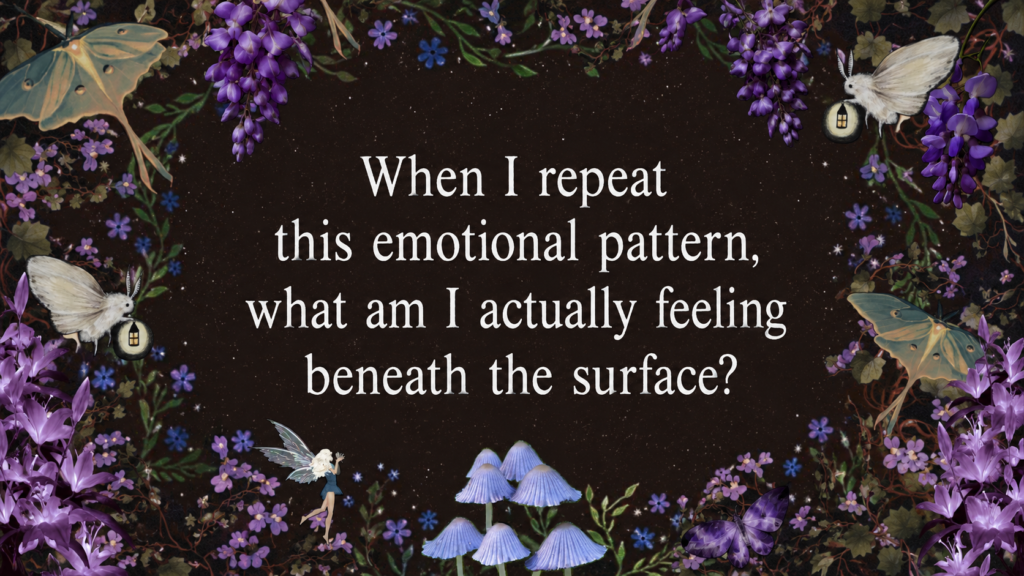
Patterns often have layers.
What looks like anger may actually be grief.
What looks like withdrawal may actually be shame.
What looks like clinginess may actually be fear of abandonment.
This prompt helps you move past the first emotion and into the truer one underneath. And that deeper emotion is often where healing begins.
Try finishing sentences like:
- Beneath my anger, I think I feel…
- Beneath my need to control, I think I feel…
- Beneath my silence, I think I feel…
Let yourself be surprised.
3. What unspoken hurt, disappointment, or fear might be fueling this cycle in me?
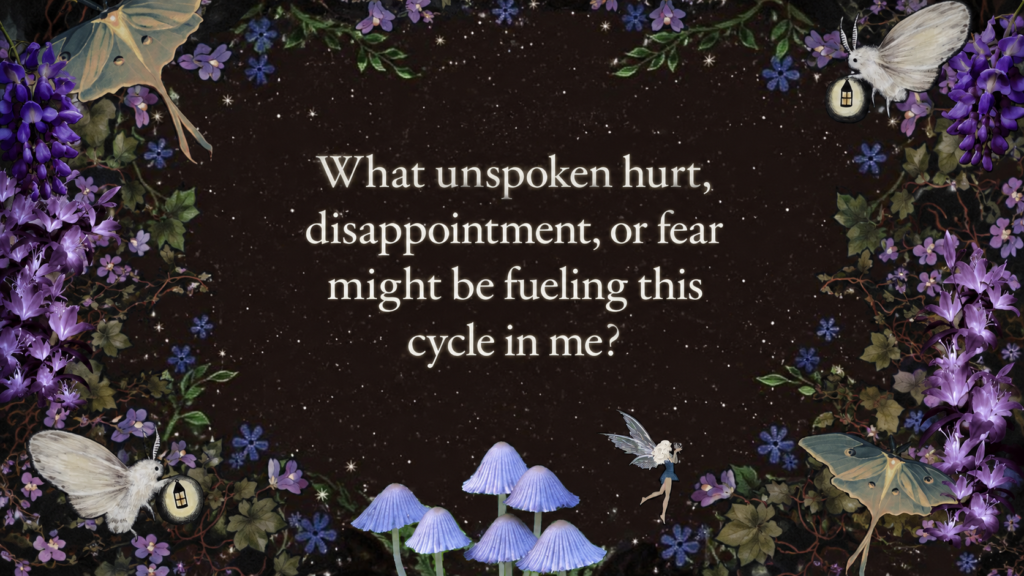
When you start asking what is really driving the cycle, you move beyond judging the behavior and begin paying attention to the pain underneath it. Many emotional patterns are not random.
They are often old protective responses shaped by past hurt. A part of you may still be guarding against rejection, inconsistency, or pain that was never fully processed.
And when you begin to see that clearly, it becomes much easier to respond to yourself with understanding instead of shame.
Reconnect with inner desires
A lot of emotional patterns are really distorted attempts to meet legitimate needs. These prompts help you reconnect with what you actually long for.
4. What do I truly need in the moments I fall back into old emotional habits?
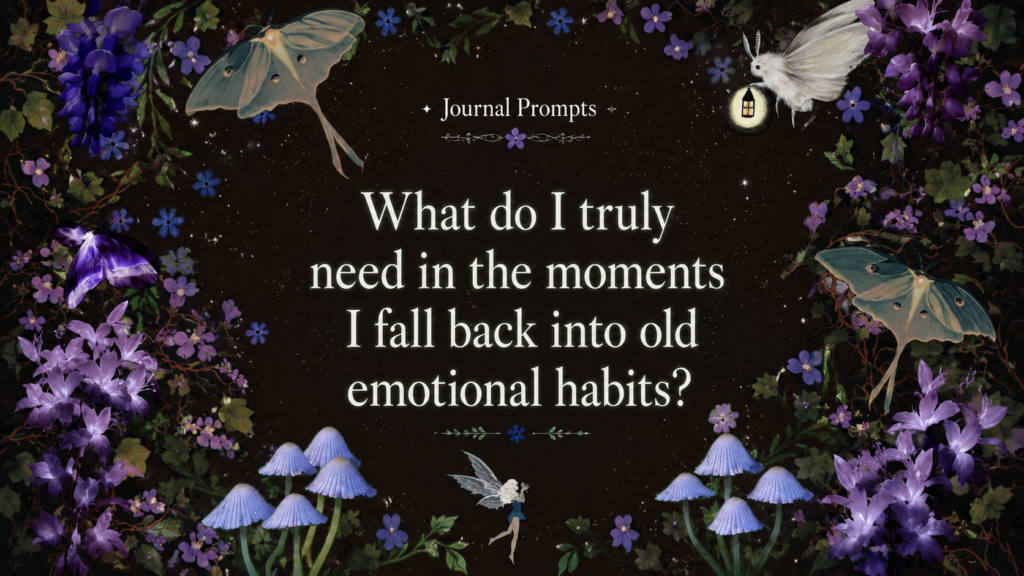
Instead of asking, “What’s wrong with me?”
you ask, “What do I need right now?”
That alone can shift you from shame into self support.
Maybe in those moments you need:
- reassurance
- rest
- space
- comfort
- honesty
- physical grounding
- emotional safety
- permission to feel
So many of us were taught to judge our needs before we ever learned how to meet them.
5. What have I been longing for that I keep trying to receive in the wrong places or patterns?
We are not “too much.” We are just starving emotionally and reaching in the wrong direction. This isn’t about blaming yourself.
It’s about recognizing the longing beneath the loop.
6. If I felt fully safe to be honest, what would I admit I deeply desire emotionally?
I really love this prompt because it invites you to move past the version of yourself that says what sounds right, and closer to what feels true.
You might start writing things like, If I were being completely honest, what I really want is to feel chosen. Or, What I deeply desire is to feel safe enough to be fully myself. Maybe your truth sounds like, I want softness, I want consistency, I want to be cared for without feeling like I have to earn it, or I want relationships where I do not have to shrink, perform, or shape shift to feel loved.
There can be so much healing in simply letting yourself tell the truth about what your heart has been needing.
Build boundaries and self acceptance
Healing is not just insight. It’s also what you do with that insight. These prompts help you interrupt self betrayal and create more internal safety.
7. Where in my life am I betraying my own needs and then resenting the results?

Sometimes resentment is not only about other people. It can also come from the moments we override our own needs to avoid discomfort or disapproval.
Maybe that looks like saying yes when you mean no, staying silent when something hurts, or continuing to give when you are already depleted.
This prompt is here to help you notice where self abandonment may have become familiar, so you can begin meeting yourself with more honesty and care.
8. What boundary could help me interrupt this emotional pattern before it takes over?
Boundaries are how we protect what is vulnerable, valuable, and sacred within us. They are not a punishment or a wall designed to keep people out. They are a form of self love and self respect.
A boundary might sound like, “I need time before responding,” “I am not available for conversations that become disrespectful,” or “I will not explain my no ten different ways.” It may look like leaving situations that repeatedly dysregulate you or choosing to self soothe before seeking reassurance from others. Even one small boundary can begin to change a pattern that has been running on autopilot for years.
9. What part of me is asking to be accepted, understood, and loved so I can stop repeating old patterns?
Repeated patterns often point toward a deeper need that has not yet received the understanding, compassion, or acceptance it is seeking. Sometimes we keep returning to the same emotional cycle because a part of us is still waiting to be seen, heard, validated, or cared for in a way it never fully received before.
Take a moment to explore what part of you may be longing for acknowledgment, what it has been trying to protect, and how offering it tenderness instead of judgment could begin to create lasting healing.
Create new coping mechanisms
Awareness is beautiful. But eventually, the nervous system needs something new to practice. These last prompts help you build healthier responses.
10. What can I do to soothe myself in a healthier way when this pattern gets triggered?

Insight alone does not always calm the trigger. Sometimes you understand exactly why you’re spiraling and are still, very inconveniently, spiraling.
So ask yourself what actually helps regulate you.
That might be:
- breathwork
- walking
- journaling
- prayer
- stretching
- music
- stepping outside
- taking space from your phone
- naming what you feel out loud
- placing your hand on your heart and staying with yourself
For me, slowing down and reconnecting with something bigger than the immediate moment has helped a lot. Practices like meditation, reflective writing, and even looking up at the night sky have reminded me that my emotional state is real, but not permanent.
11. What would it look like to pause, breathe, and respond differently instead of reacting from habit?
Many of our reactions happen so quickly that we rarely stop to question them. Take a moment to explore what might become possible if you gave yourself space between the trigger and the response.
How could slowing down, grounding yourself, and choosing a different action help you break old patterns and respond in a way that feels more aligned with the person you are becoming?
12. What new way of supporting myself could replace this old pattern?
Old patterns often develop because they once offered comfort, protection, or a sense of safety. Even if they no longer support you, they may have begun as a way to cope with pain, uncertainty, rejection, fear, or emotional overwhelm.
This reflection invites you to look beneath the pattern with compassion and explore what need it has been trying to meet. From there, you can begin imagining healthier forms of support, comfort, and self care that honor where you have been while helping you move forward in a more grounded and loving way.
Using these prompts without pressure
You do not need to answer all 12 in one sitting. Give yourself permission to move through them slowly so the process feels supportive rather than overwhelming.
A more supportive rhythm might be:
- choose one prompt at a time
- write for 10 to 20 minutes
- pause and notice what came up in your body
- close with a few deep breaths
- follow the writing with rest, tea, stretching, or silence
If you want extra support after journaling, Innertune can be a gentle tool to help you shift your inner state and begin reinforcing more supportive thoughts and emotional patterns.
Shadow work is not meant to convince you that you are broken. It is meant to help you meet the parts of yourself that are still asking to be seen, supported, and cared for.
Final thoughts

Healing has taught me that repeated patterns often carry messages we have not fully learned how to hear yet. I used to feel disappointed in myself whenever I noticed an old emotional loop returning. I thought healing meant I would never react that way again. But over time, I have come to understand that these patterns often return because something within us is still asking to be seen, understood, and cared for more deeply.
When you begin meeting yourself with curiosity instead of judgment, something powerful can start to shift. The emotional loops that once felt draining can begin to show you where your healing wants to go next, what part of you still needs support, and what new choices are ready to be created.
So move through these prompts with gentleness. Be honest with yourself. Be kind to yourself. Rest when you need to. And trust that even the quiet moments of self reflection are helping you return to yourself.
I would truly love to hear from you. Was there a prompt that resonated with you the most, or is there a pattern in your life that you are beginning to understand more deeply? Comment below and let me know!
With love,
Deeana


Affiliate disclosure: This post contains affiliate links. If you purchase through them, I may earn a small commission at no extra cost to you.
Everyone carries a shadow, and the less it is embodied in the individual’s conscious life, the blacker and denser it is. At all counts, it forms an unconscious snag, thwarting our most well-meant intentions.
Carl Jung